Tips from the team:
- Alcohol means zero tolerance: The rule is strict and enforced. Simply don’t drink if you’re driving that day.
- Avoid driving at night: Street lighting is often absent on secondary roads, especially in the mountains.
- Drive defensively: Some Albanian drivers overtake in risky situations. Stay alert and leave plenty of room.
- Watch out for pedestrians and animals: You’ll often find them by the roadside, including on major roads.
- Keep your documents close at hand: Police checks are common, especially for vehicles registered abroad.
Driving in Albania: Roads, Rules and Practical Tips
From the mountain passes of the Albanian Alps to the coastal roads of the Riviera, driving in Albania is an essential part of the adventure. The good news for travellers from France, Belgium and Switzerland is that you drive on the right, just like at home. But with road conditions that can vary, local driving habits and strict regulations, a little preparation goes a long way.
Here’s everything you need to know to hit the road with confidence.
Speed limits in Albania
The basic rules:
- 40 km/h in towns and built-up areas;
- 80 km/h on secondary roads;
- 90 km/h on national roads;
- 110 km/h on motorways.
Dipped headlights are mandatory at all times, day and night, and seat belts must be worn in both the front and rear seats. Speeding fines range from €30 (for exceeding the limit by 10 km/h) up to €200, and your licence may be confiscated for exceeding the limit by more than 20 km/h, even if you are a foreign driver.
Drink-driving: zero tolerance
Albania has zero tolerance for alcohol and drugs behind the wheel. In practice, even a very small amount of alcohol in your blood (from 0 to 0.3 mg) results in a €150 fine and a 6-month driving ban. Above 0.5 mg, the fine rises to €200, while the driving ban remains 6 months.
The simplest approach is to consider driving and drinking alcohol completely incompatible during your stay, whatever the occasion (dinner, tasting local raki…).
The condition of the roads and local driving habits
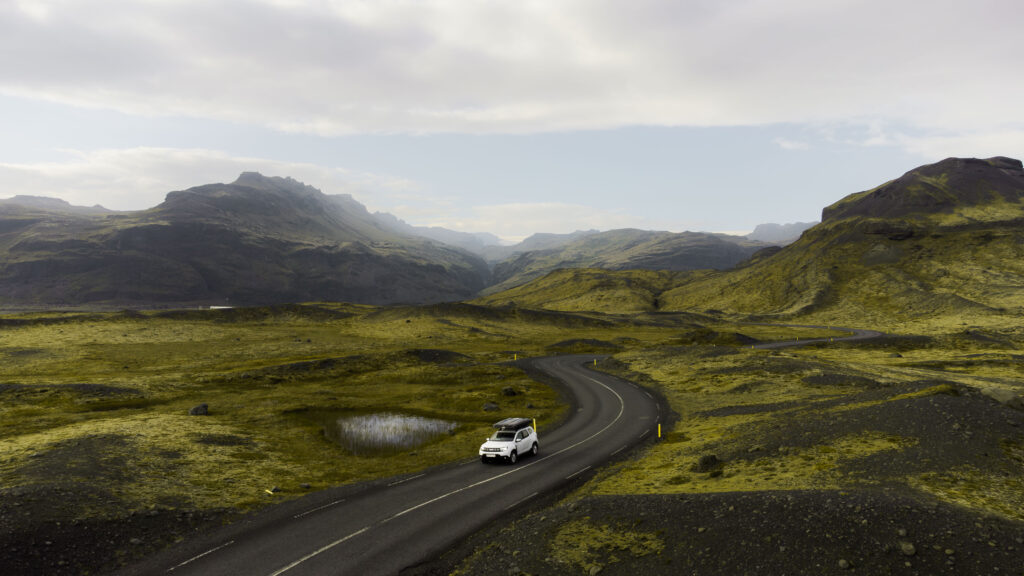
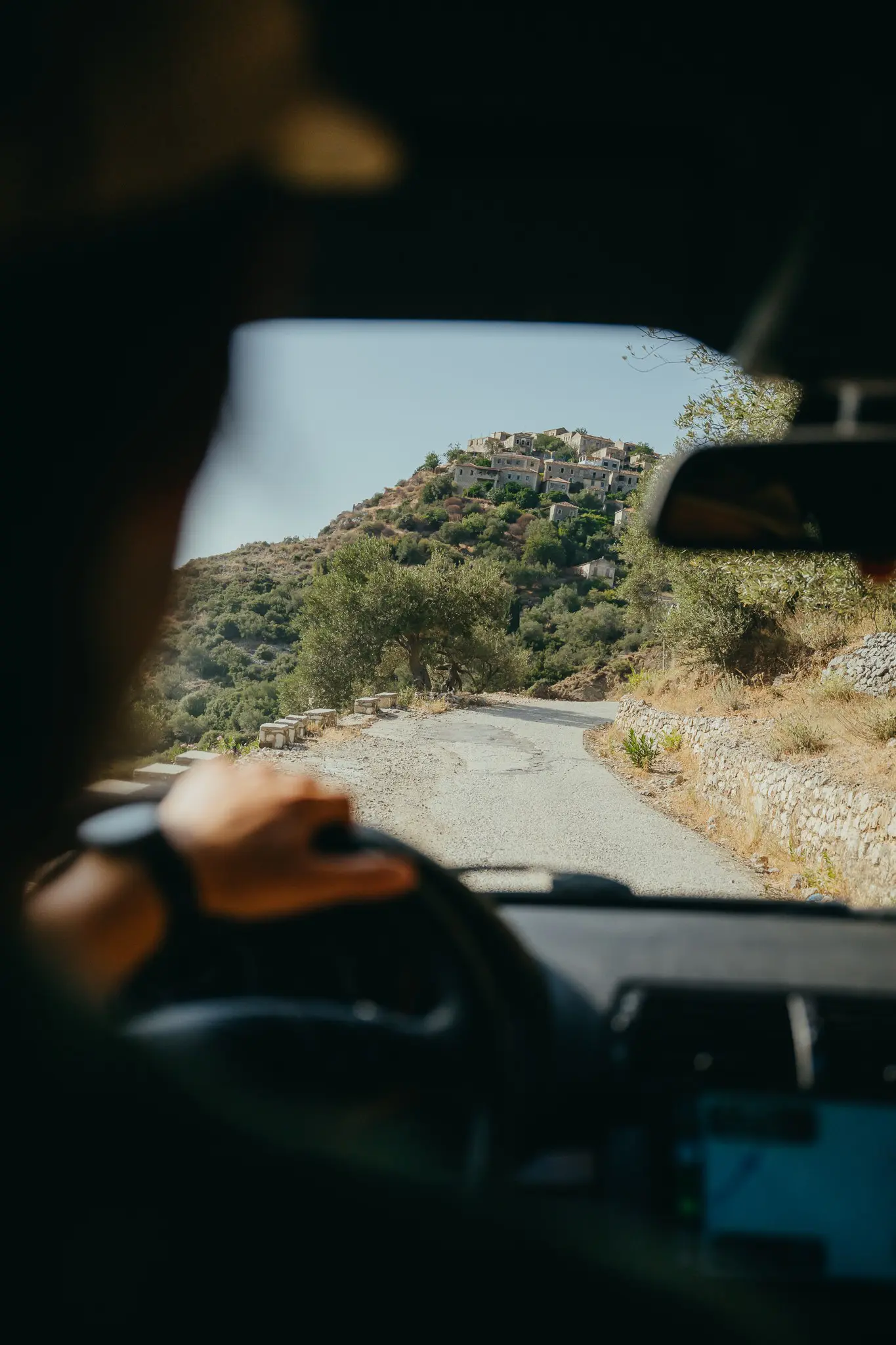
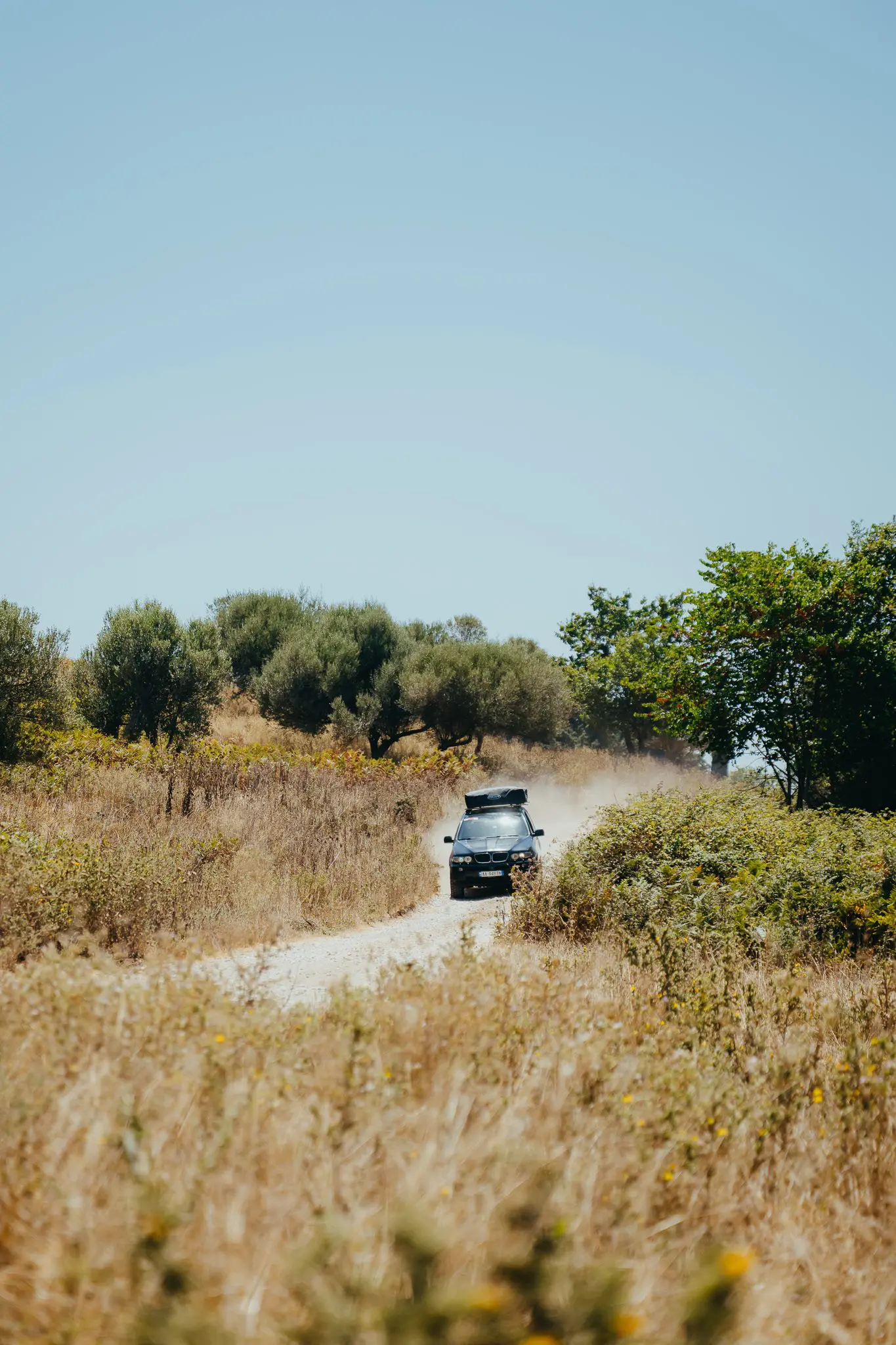
The main roads and coastal route are generally in good condition, but some secondary roads, especially in rural or mountainous areas, are more basic, with potholes, no road markings and blind bends.
As for driving habits, Albanian drivers can sometimes be quite assertive, with risky overtaking, even on bends. Defensive driving is your best approach: keep your distance, anticipate other drivers overtaking, and never assume that right of way will be strictly observed at roundabouts or intersections.
Pedestrians are also often found walking along the roadside, including on faster roads, so stay alert, especially when leaving villages.
Police checks and parking
Police checks
They’re common, especially on major roads and at city entrances. Vehicles registered abroad tend to receive extra attention. Always keep your driving licence, vehicle registration document and proof of insurance close at hand.
Parking
Finding a parking spot can be a real challenge in major cities like Tirana, where space is limited. In rural areas and smaller towns, however, parking is usually easy and often free.
Driving at night
Avoid it whenever possible. Secondary roads often have no street lighting, making it harder to spot potholes, pedestrians and animals.
Driving in Albania with Albania Nomads
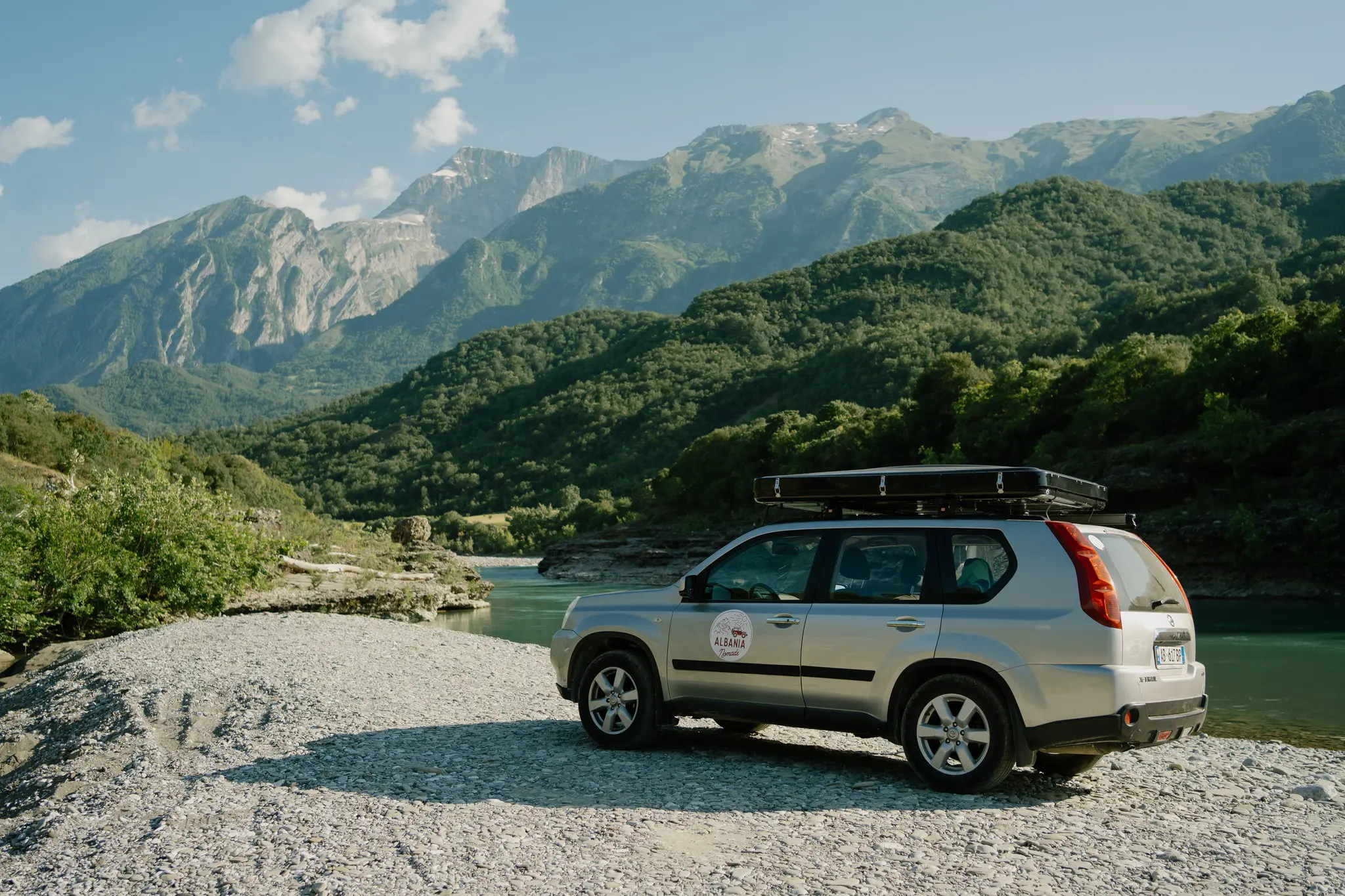
The vast majority of our travelers drive in Albania for the first time on their road trip with Albania Nomads. And it goes smoothly: our 7-day itinerary alternates between main roads and small mountain roads, helping you get comfortable behind the wheel step by step.
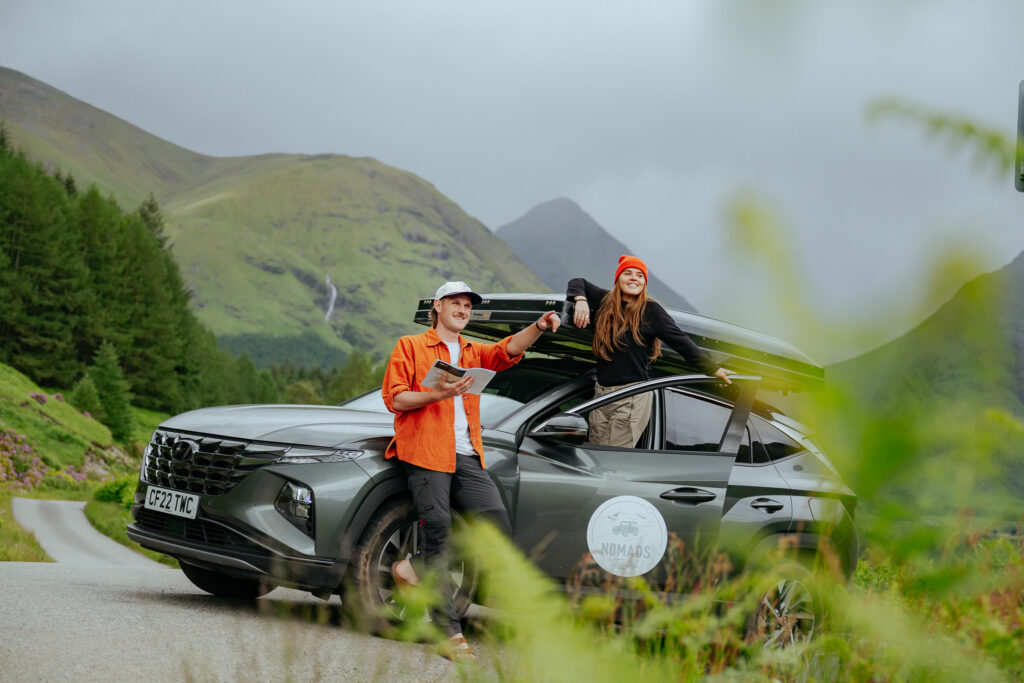
Your SUV with a rooftop tent is comfortable and easy to handle, even on the winding roads of the Albanian Riviera and the northern Alps.